Karst Tourist Area
1. Introduction
The Karst Tourist Area is a scenic spot located within Wulong District of Chongqing Municipality. It boasts rare karst natural landscapes, including caves, sinkholes, ground fissures, canyons, peak clusters, and alpine grasslands, offering a comprehensive array of formations. It also features a rich variety of vacation, leisure, entertainment, and sports activities, along with the unique folk customs of ethnic minorities such as the Tujia, Miao, and Gelao peoples. In 2011, it was rated as a National AAAAA Tourist Attraction. The Wulong Karst Tourist Area comprises three parts: the Three Natural Bridges, Fairy Mountain, and Furong Cave.
2. Geographical Environment
2.1 Location
The Chongqing Wulong Karst is situated in Wulong District, at longitude 108.72' and latitude 29.29'. The Three Natural Bridges are located in the southern part of Fairy Mountain, positioned between Fairy Mountain and Wulong District. Fairy Mountain is located in Fairy Mountain Subdistrict, Wulong District, Chongqing, within the Wuling Mountains in eastern Chongqing. Furong Cave is situated on the banks of the Furong River, 4 kilometers from Jiangkou Town in Wulong District.
2.2 Climate Characteristics
Wulong Karst experiences a subtropical monsoon humid climate characterized by mild temperatures, abundant rainfall, insufficient sunshine, distinct seasons, long frost-free periods, and high humidity. The average annual sunshine duration is 1160.5 hours (with annual variations between 1024.6 and 1276.6 hours). The average annual temperature is 17.9°C, with an extreme maximum of 41.7°C and an extreme minimum of -3.5°C.
2.3 Karst Landforms
Karst landforms are unique landscapes formed by the dissolution, precipitation, erosion, deposition, gravitational collapse, and subsidence of soluble rocks by groundwater and surface water. In China, they are primarily distributed in provinces and regions such as Guangxi, Guizhou, and Yunnan.
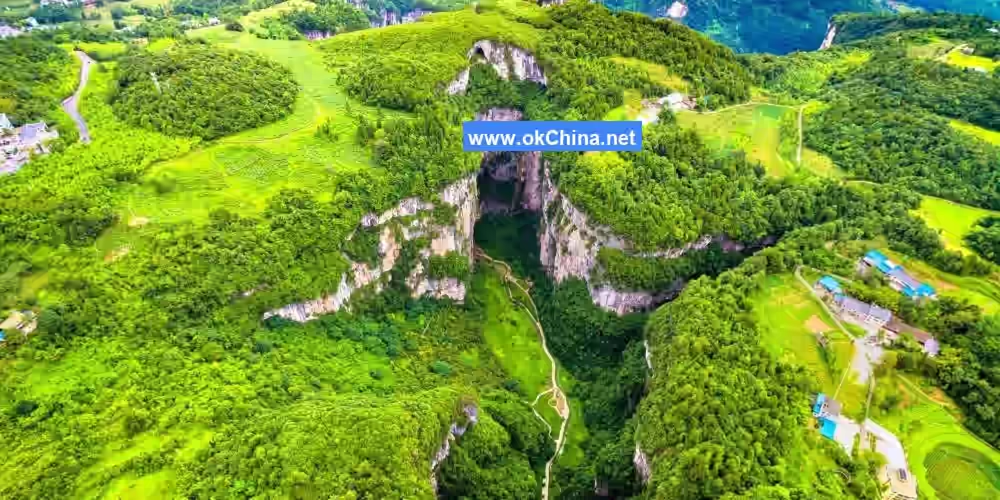
The formation of karst landforms mainly originates from the solubility of carbonate rocks like limestone and dolomite. Over long periods, water containing carbon dioxide dissolves these rocks, gradually shaping various formations. The surface often displays landscapes such as peak forests, peak clusters, isolated peaks, sinkholes, and swallow holes. The Guilin landscape is considered a classic example of karst peak forest scenery, where jade hairpin-like peaks stand abruptly along the banks of the Li River, with the river meandering through them. The beauty of "the river like a green silk ribbon, the mountains like jade hairpins" is intoxicating. Sinkholes, resembling giant mouths opened by the earth, are deep and mysterious. Some sinkholes conceal unique ecosystems like primeval forests and underground rivers at their bottoms. The Wulong Sinkhole Group is a representative example, its spectacular scenery made famous as a filming location for several movies.
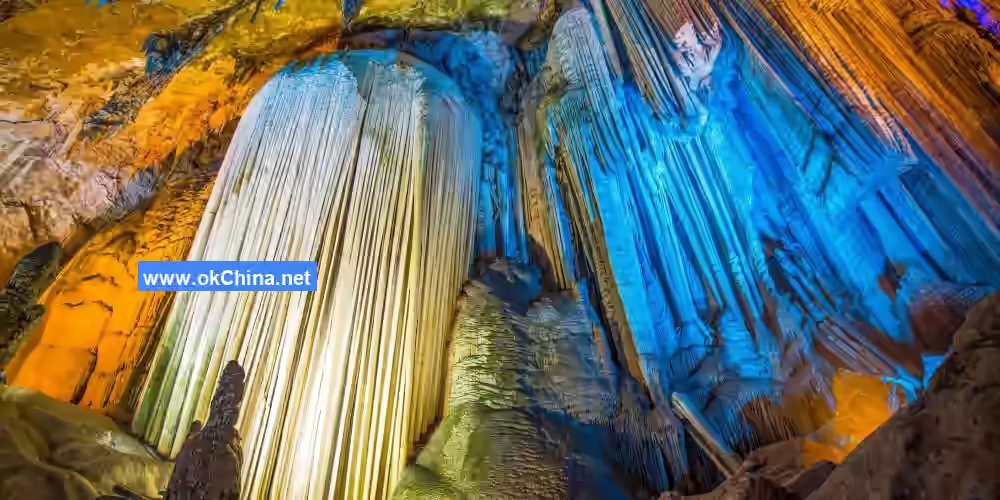
Underground karst landforms are even more fascinating. Caves are their primary form, featuring a dazzling array of stalagmites, stalactites, and stone columns inside. These formations slowly develop from the continuous dripping and deposition of calcium carbonate-rich water within the caves. Under lighting, they resemble jade trees, flowers, or various birds and beasts, creating endlessly marvelous scenes. The Zhijin Cave in Guizhou is a vast and extraordinarily scenic cave. The "Silver Rain Tree" stalagmite inside, standing 17 meters tall, is exquisitely slender and considered a wonder of the cave world.
Karst landforms hold extremely high tourism value. For nature lovers, the landscape paintings here are a visual feast. Whether cruising the Li River to admire the reflection of karst peaks in the water or exploring the mysteries and wonders of the underground world in caves, visitors can find themselves captivated. Photography enthusiasts can capture countless breathtaking images here, whether the silhouettes of peak forests at dawn or close-ups of colorful stalactites inside caves, all possessing strong artistic appeal.
From a cultural perspective, karst areas often nurture unique regional cultures. Local ethnic minorities have thrived on this land, creating rich and diverse folk cultures. For example, in Guilin, Guangxi, the customs of the Zhuang, Yao, and other ethnic groups blend with the karst landscape. Tourists can participate in their traditional festivals, enjoy ethnic song and dance performances, savor local delicacies, experience the strong ethnic atmosphere, engage in unique ethnic handicraft making, and gain a deeper understanding of these peoples' history and traditions.
Furthermore, karst areas provide excellent venues for outdoor adventure enthusiasts. Hiking trails between peak forests, exploring undeveloped caves, or engaging in extreme sports like rappelling at sinkhole edges can satisfy people's desires for self-challenge and closeness to nature. With its unique geological landscapes, rich cultural connotations, and diverse tourism experiences, karst landforms have become a dream destination for many tourists, attracting people from around the world to appreciate the uncanny craftsmanship of nature and the unique charm of human culture.
3. Main Attractions
3.1 Furong River
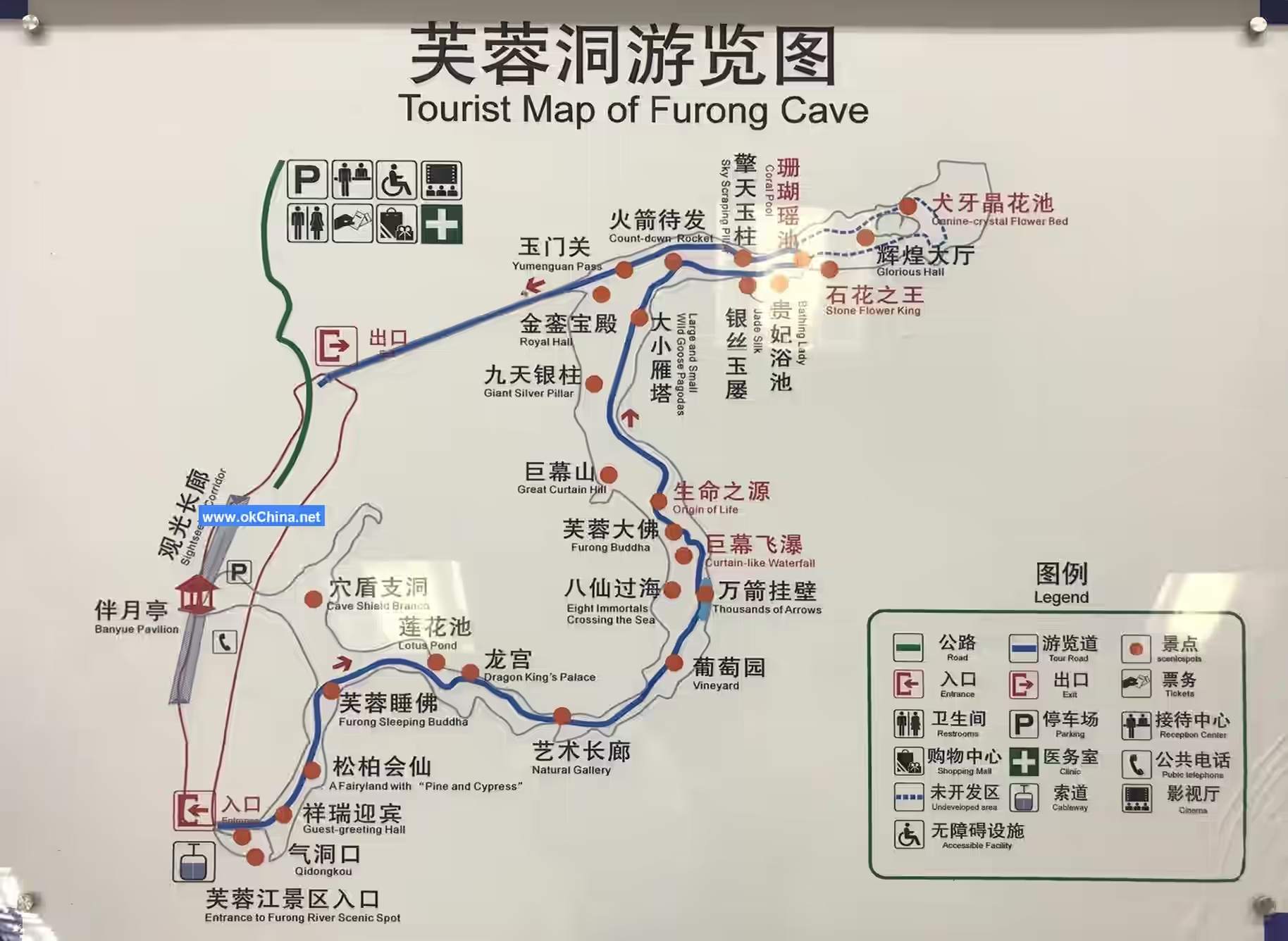
The "Number One Cave Under Heaven" — Furong Cave — developed in Cambrian and Ordovician carbonate rocks. It consists of caves such as Tongqikeng Cave, Shuairen Cave, Weijiangling Cave, Dongba Cave, Xinlukou Cave, Shuilian Cave, Furong Cave, Gangan Cave, and Sifang Cave. The cave system is vast in scale, with diverse and abundant secondary physico-chemical deposits inside. Various dissolution forms within the cave, spectacular collapse accumulations, a dazzling array of speleothems, pools at different stages, fallen stalactites and their damage phenomena — all record its long and eventful historical evolution process. China's renowned cave expert, Professor Zhu Xuewen, commented, "From the perspectives of scientific research and popular science, Furong Cave can be called a 'cave science museum'."
3.2 Furong Cave
A UNESCO World Natural Heritage site, National AAAAA Tourist Attraction, China's Most Beautiful Cave, National Geopark, and National Key Scenic Area. With a total length of 2700 meters, Furong Cave is renowned for its numerous shafts, comprehensive types of cave deposits, perfect forms, and pure quality. Its shaft group is the largest discovered both domestically and internationally. Professor Zhu Xuewen, President of the China Caves Association, commented, "Furong Cave is a splendid and glorious underground art palace, a cave science museum with rich content." Tourists call it the "Number One Cave Under Heaven." On June 27, 2007, Furong Cave, along with the Three Natural Bridges and the Houping Qingkou Sinkhole scenic area, was inscribed on the World Natural Heritage List, becoming China's 6th and Chongqing's first World Natural Heritage site, and also the only cave in China listed as a World Natural Heritage site.
The Furong River originates in Suiyang County, Guizhou Province. Like a green silk ribbon, it meanders between Chongqing and Guizhou. It is a tributary of the Wu River and a stunning natural treasure bestowed upon this land.
Boarding a cruise on the Furong River is like entering a flowing landscape painting. The river water is clear as a mirror, with continuous green mountains rising and falling on both banks, their reflections merging with the water, blurring the lines between mountain and river. At times, mist rises from the river surface, dreamlike and illusory, shrouding the entire river in a veil of mystery, resembling a fairyland. Traveling along the river, the mountains in various shapes are even more astonishing. Some pierce the clouds like sharp swords, some stand gracefully like fairies, others gallop like steeds — each peak possesses a unique charm, as if narrating ancient legends.
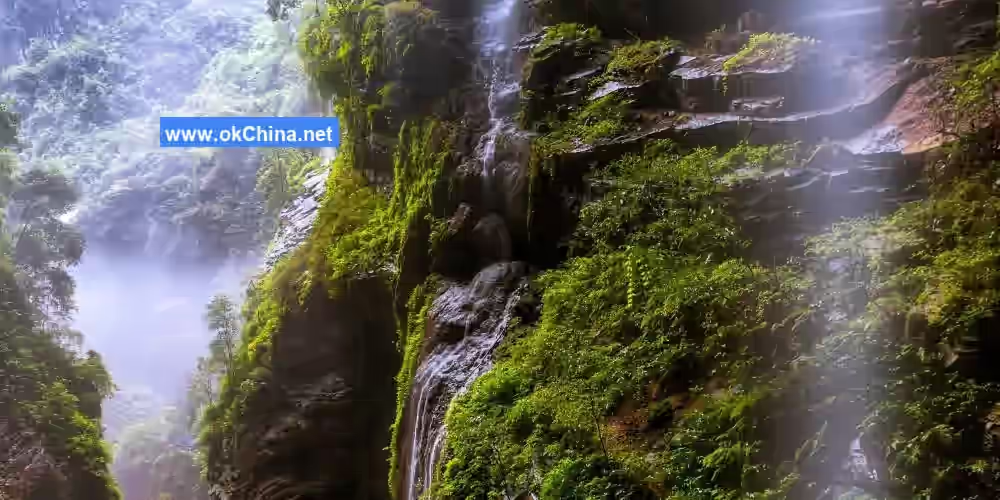
The canyon scenery of the Furong River is particularly distinctive. The canyon is deep, narrow, and long, with steep cliffs lining both sides. Looking up, only a sliver of sky remains. The river flows quietly through the canyon, with only the cruise boat breaking the tranquility by creating ripples on the water's surface. In certain sections of the canyon, waterfalls can be seen cascading from heights, like a silver river falling from the heavens. The splashing water droplets form brilliant rainbows under sunlight, adding a touch of vibrant color to the serene canyon.
Here, there are not only magnificent natural landscapes but also abundant rare flora and fauna. The river teems with diverse fish species, often seen swimming happily. From the forests on both banks, the clear songs of birds can be heard intermittently. With luck, one might catch a glimpse of rare Francois' langurs leaping and playing among the branches.
The Furong River is a paradise far from the hustle and bustle, an ideal place to relax, unwind, and get close to nature. Whether cruising to enjoy the scenery and feel the tranquility and beauty of the landscape, strolling along the riverbank to breathe fresh air and listen to the sounds of nature, or experiencing the joy of fishing on the river, you can immerse yourself in this poetic, flowing landscape painting, forgetting all worries and fatigue.
3.3 Fairy Mountain
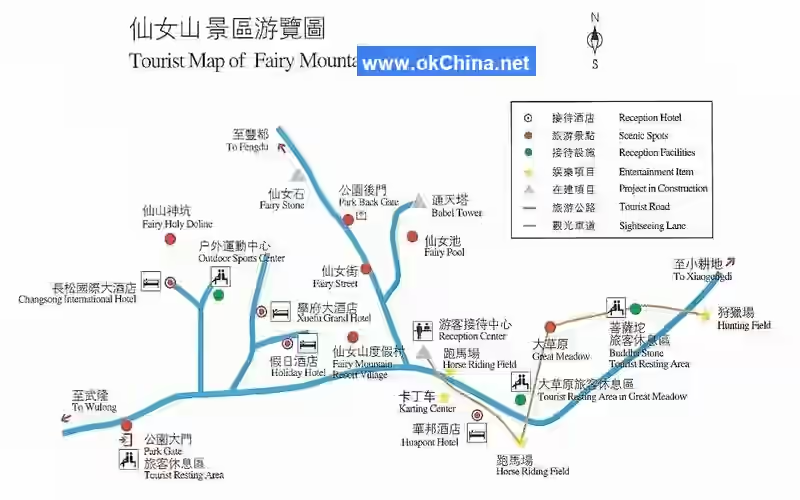
Fairy Mountain National Forest Park is a National AAAAA Tourist Attraction located in Wulong District, Chongqing. It covers a total area of 8910 hectares, with an average altitude of 1900 meters and a highest peak of 2033 meters. It is renowned as the "Oriental Switzerland" for its uniquely charming alpine grasslands in southern China, the rare forest and snowfield scenery in southern regions, and its serene, beautiful forested wilderness landscapes. Together with the magical Furong Cave, the beautiful Furong River, and the world's largest group of geological wonders, the Three Natural Bridges, it forms Chongqing's premier tourism and vacation destination. The average temperature on Fairy Mountain is 15 degrees Celsius lower than that of Chongqing's main urban area, earning it the reputation of the "Summer Palace of the Mountain City."
Fairy Mountain, located on the north bank of the Wu River in Wulong District, Chongqing, is renowned for its unique alpine grassland scenery and enjoys the reputation of the "Oriental Switzerland."
Stepping onto Fairy Mountain, the first sight that greets the eyes is the vast, boundless grassland. The continuous meadows spread like green carpets between the mountains, extending to the horizon. On the grassland, herds of cattle and sheep graze and wander leisurely, like spirits of the prairie, adding infinite vitality to this tranquil land. Deep within the grassland, small wooden cabins are scattered like stars, resembling scenes from a fairy tale, evoking a sense of longing.The forest resources of Fairy Mountain are also extremely abundant. Dense forests are lush and verdant, with various trees such as pines and firs standing tall and upright, blocking out the sky. Strolling along the forest paths, breathing in the fresh air rich in negative oxygen ions, and listening to the cheerful songs of birds and the rustling of leaves, it feels as if one is in a natural oxygen bar, where all stress and fatigue can instantly dissipate.
The climate here is pleasant; even during the scorching summer, the average temperature is much lower than that of the main urban area of Chongqing, making it an excellent destination for escaping the heat. In winter, Fairy Mountain is draped in silver, transforming into a world of ice and snow. At the ski resort, people enjoy the pleasures of skiing and playing in the snow, with laughter and joy echoing through the valleys.
Fairy Mountain is also a place full of romance and poetry. Legend has it that fairies once descended here to play, leaving behind many touching stories. Standing atop the mountain and overlooking the magnificent landscape, with the distant sea of clouds churning and rolling, one can almost see the graceful figures of fairies gliding through the clouds. Whether it's couples strolling hand in hand on the grassland, admiring the beautiful sunset; families going on outings, picnicking and playing on the grass; or photography enthusiasts capturing the breathtaking moments of nature, Fairy Mountain can meet all your needs and offer you an unforgettable dreamlike journey.
3.4 Three Natural Bridges
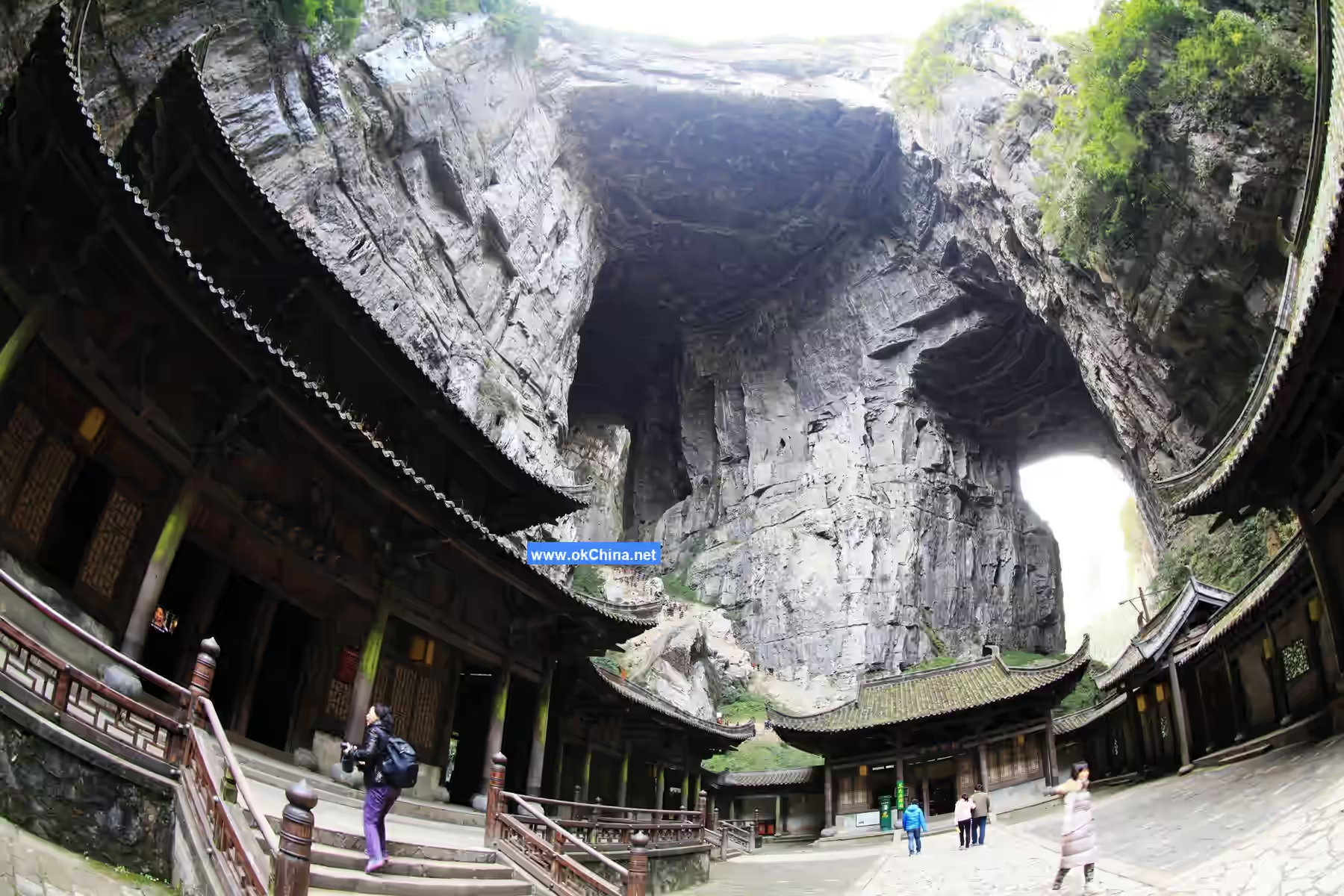
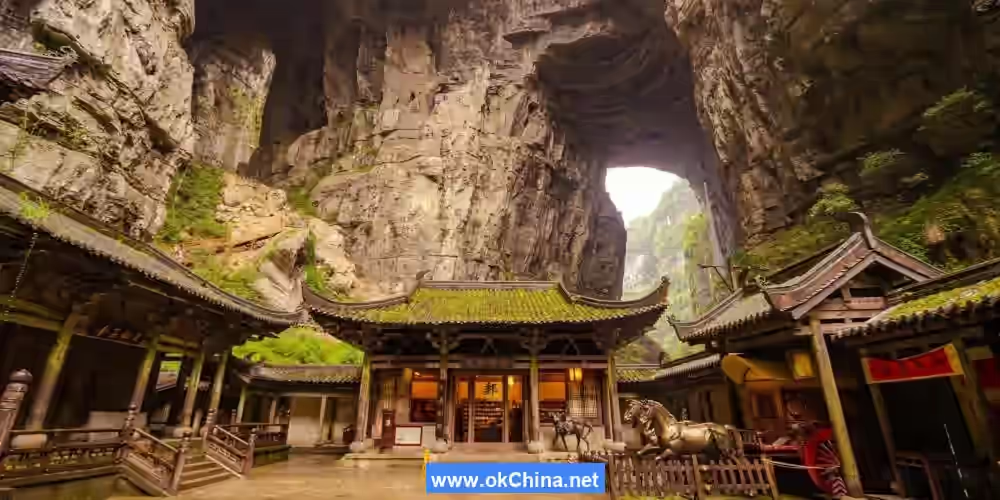
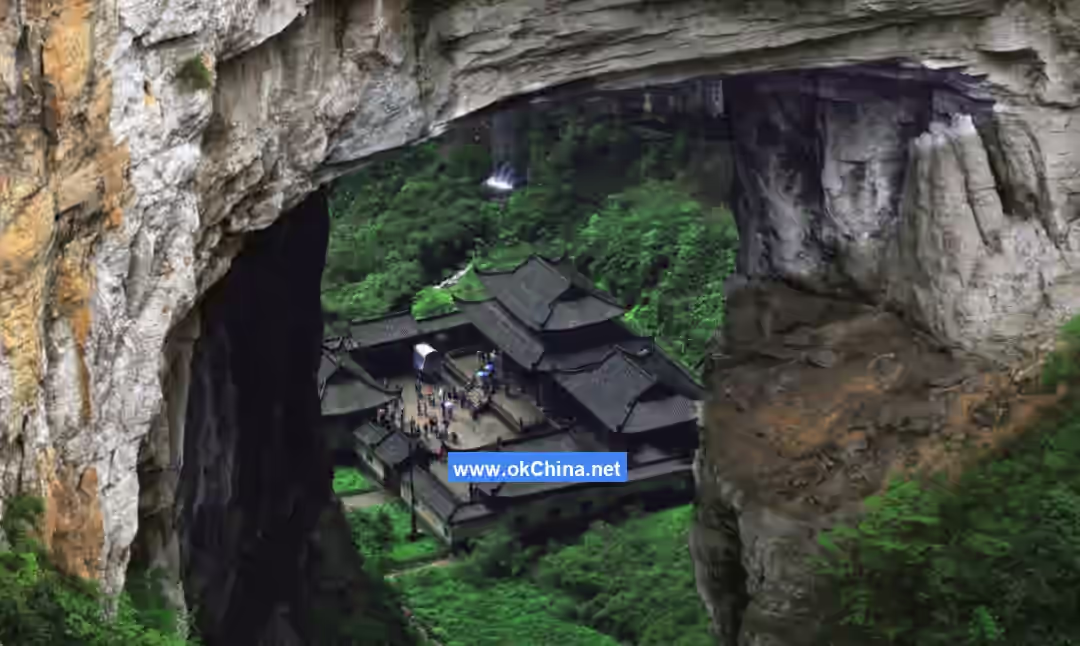
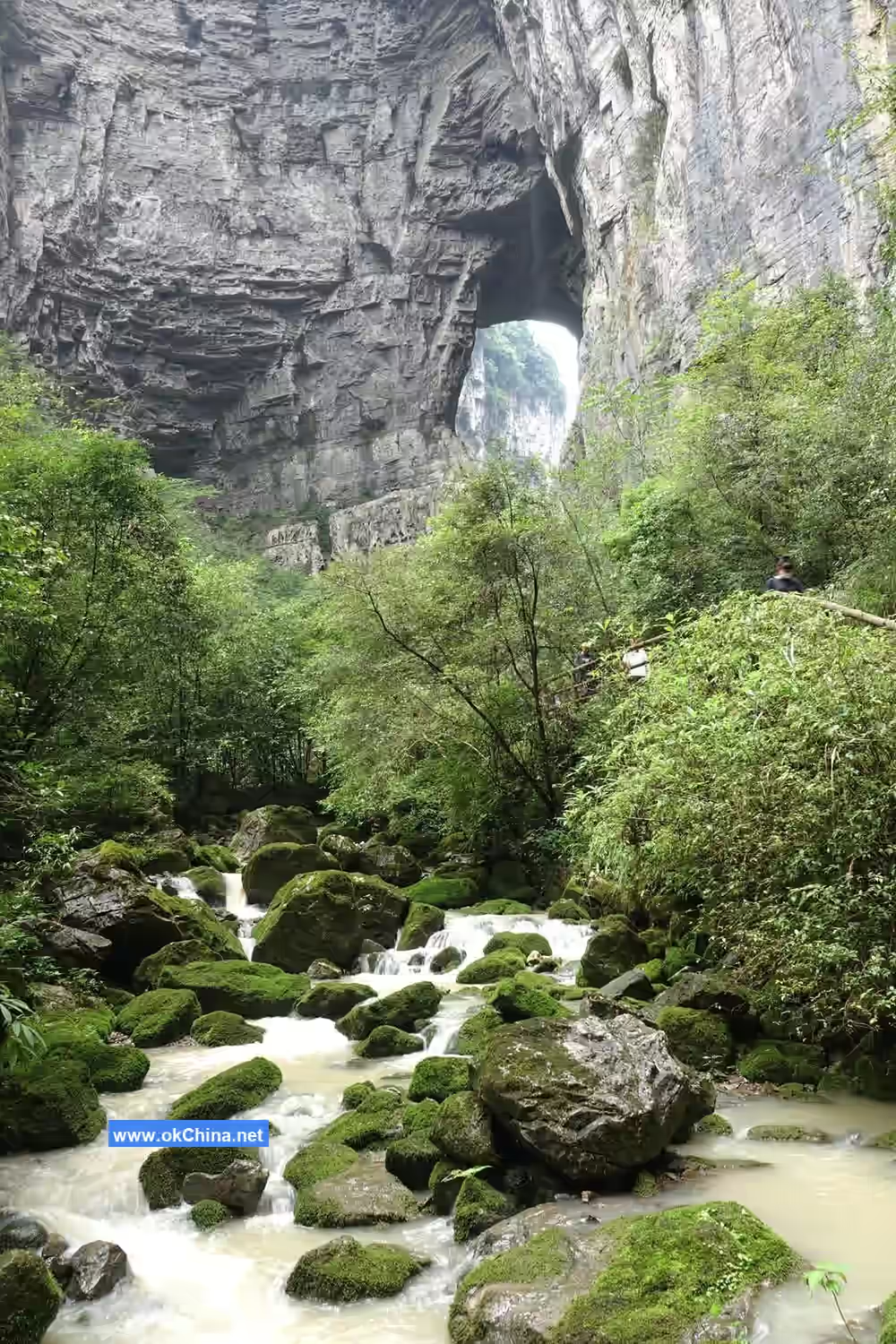
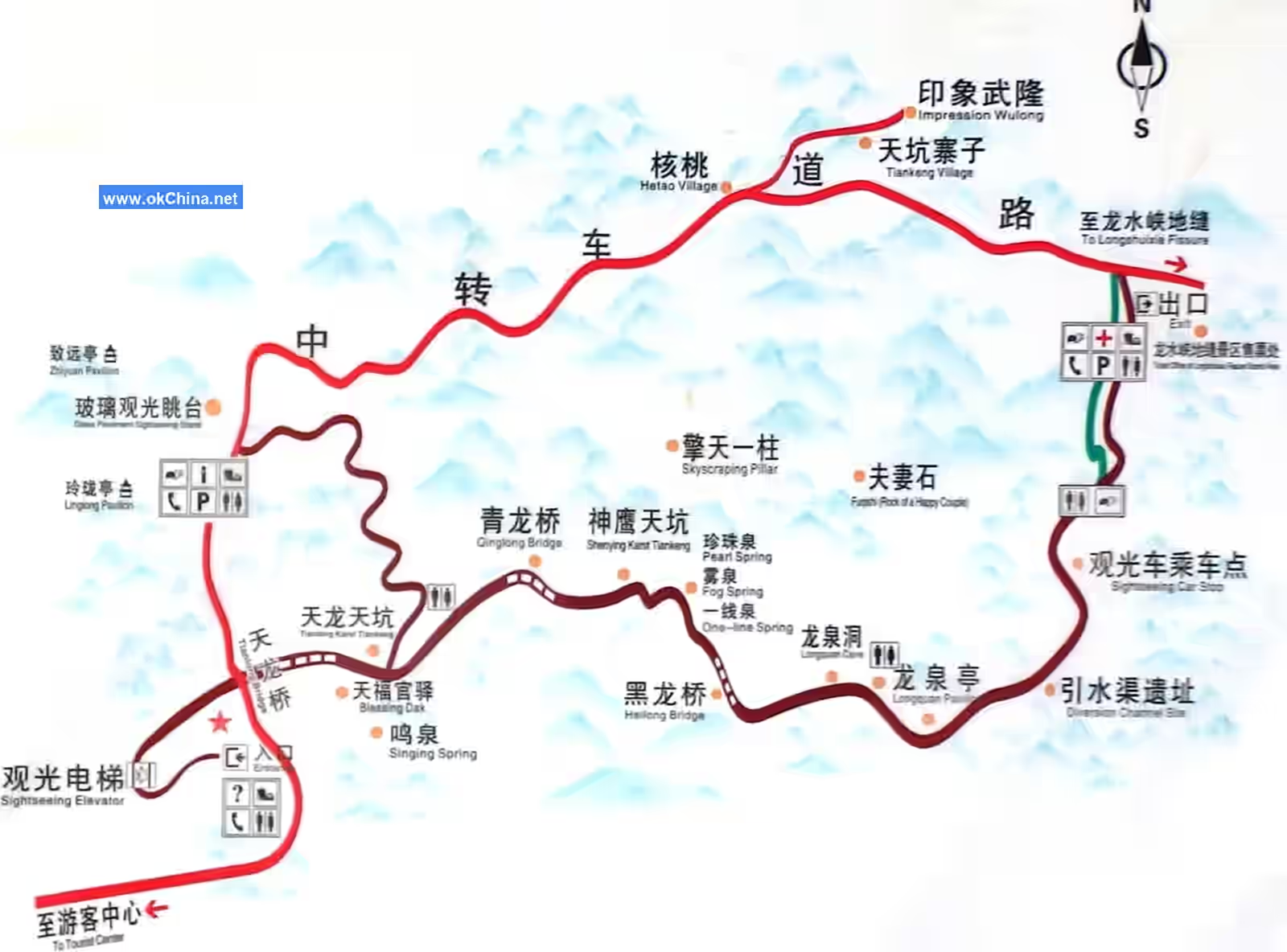
The Three Natural Bridges, also known as the Three Bridges in Tiankeng, are a rare geological wonder and an ecological tourism area in the country, typical of karst landforms. The scenic area is renowned for the three majestic stone arch bridges—Tianlong Bridge, Qinglong Bridge, and Heilong Bridge—which form the largest natural bridge group in Asia. Located at the junction of Baiguo Township and Hetao Township, 20 kilometers southeast of Wulong District, these three natural stone arch bridges created by nature are characterized by their grandeur, uniqueness, danger, beauty, seclusion, and extremity.
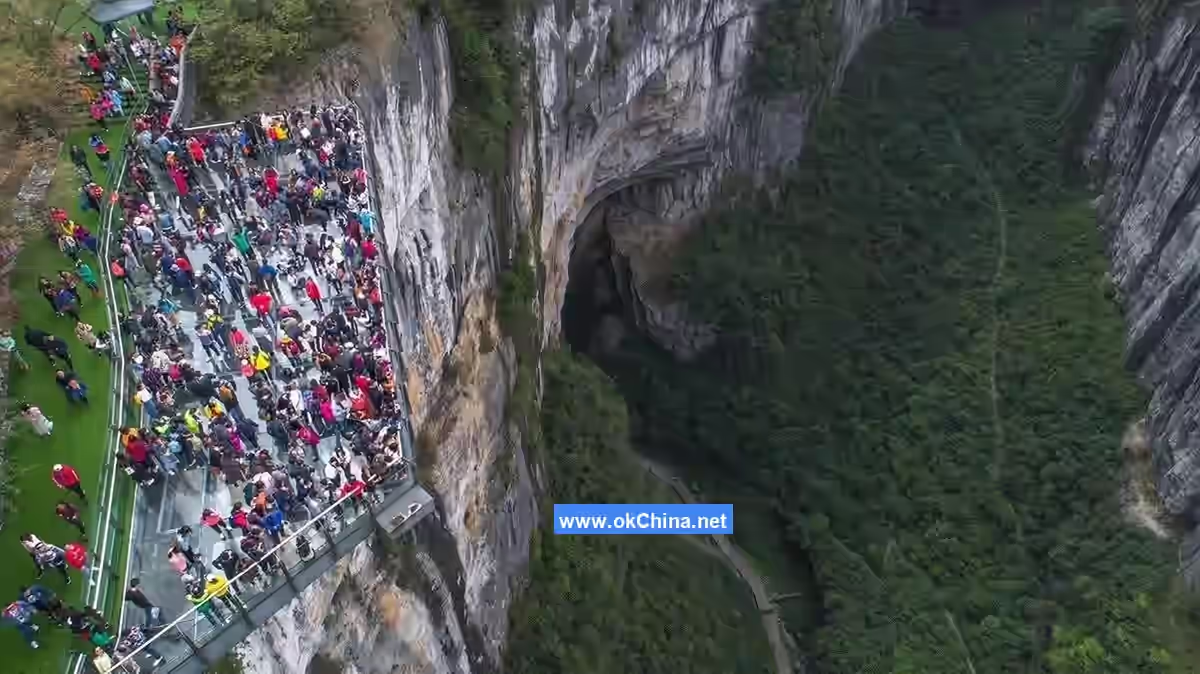
On December 31, 2022, the cliffside 360-degree rotating elevator—Tianlong Spiral Elevator—built in the Three Natural Bridges scenic area officially began trial operations.
The Tianlong Spiral Elevator was imported from Germany, with a vertical height of 135.85 meters and an operating height of 115 meters. It features three double-decker panoramic elevators running side by side independently, with an operating speed of 3 meters per second. During operation, the elevator rotates slowly 360 degrees automatically, allowing visitors to admire the karst natural scenery of the World Natural Heritage site, the Three Natural Bridges in Wulong, Chongqing, from different angles.
3.5 Longshuixia Fissure Gorge
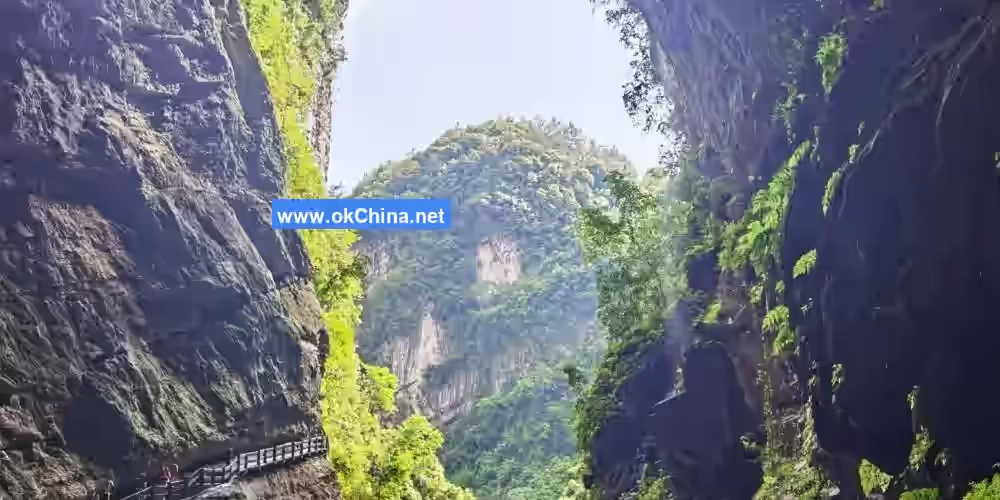
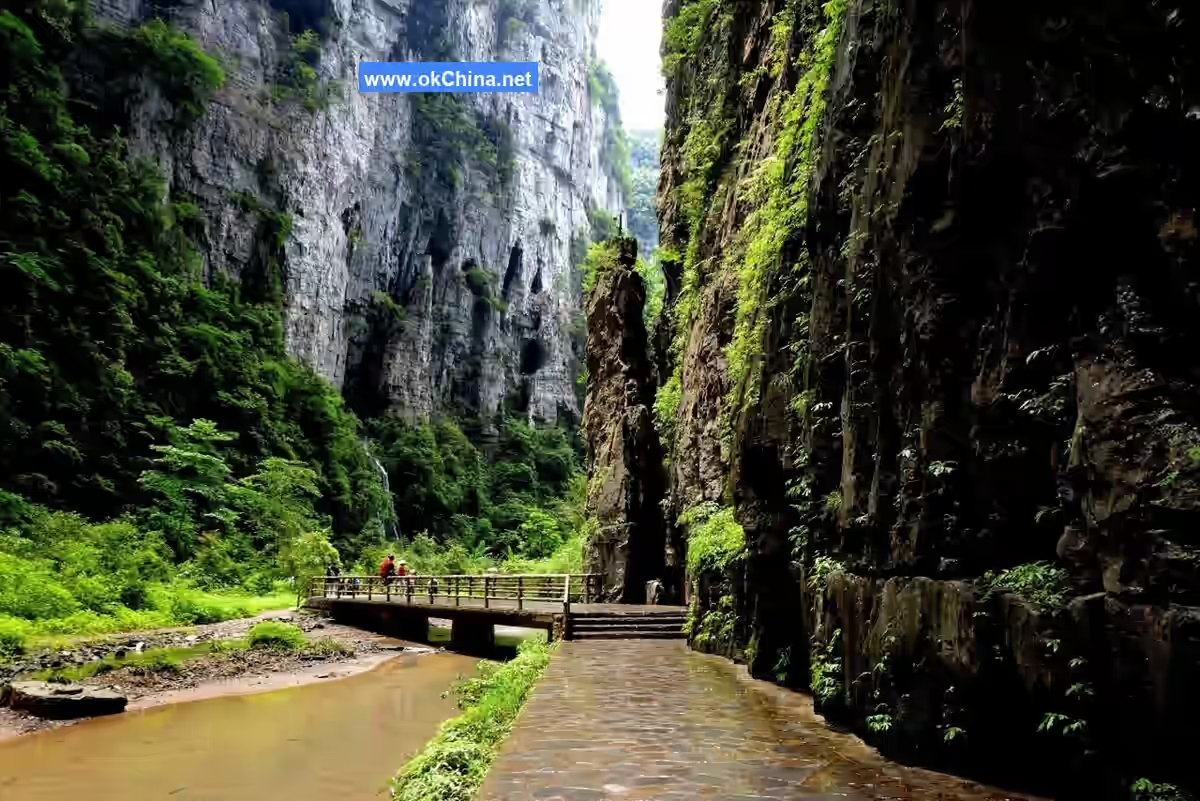
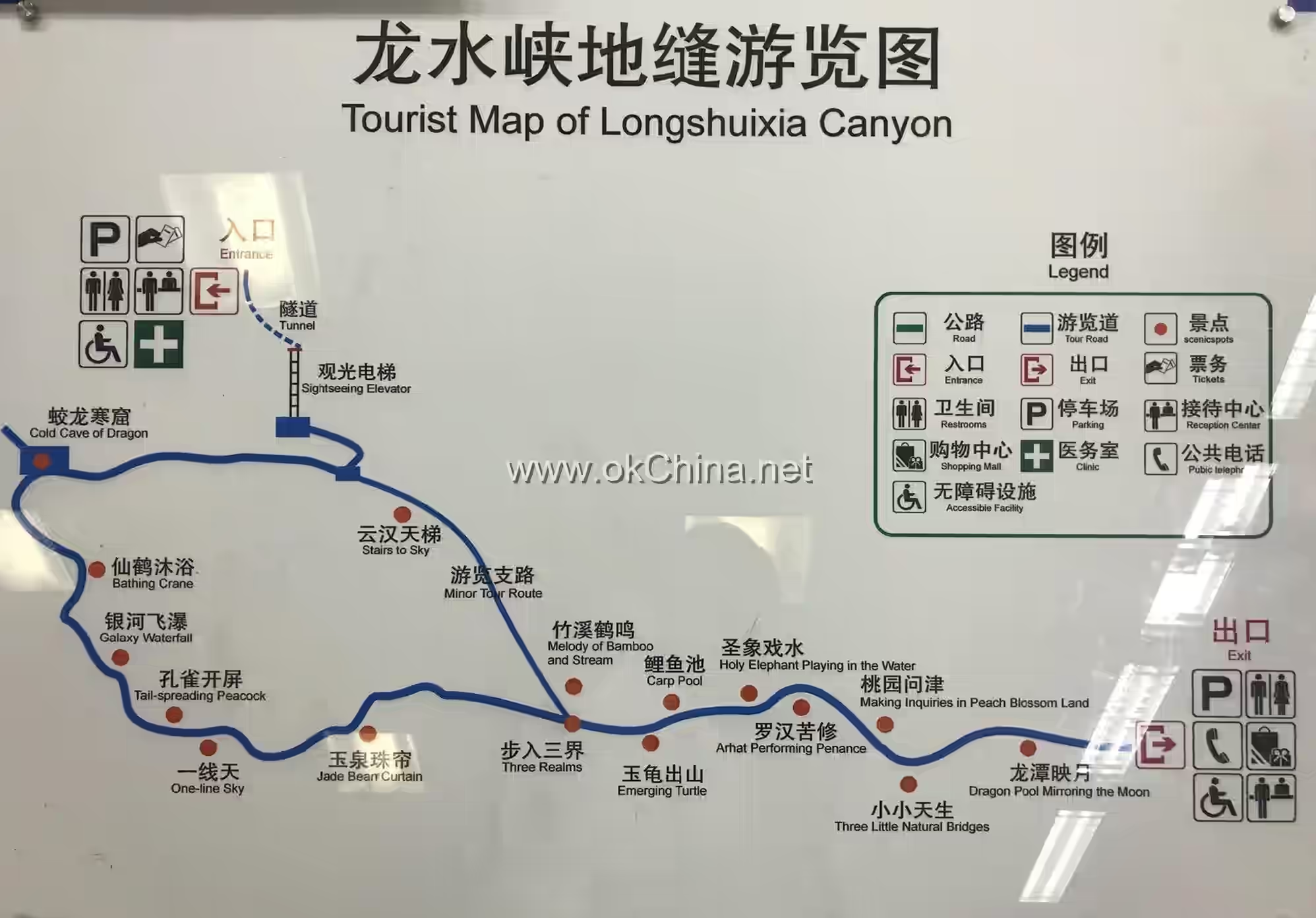
The Wulong Fissure Gorge Scenic Area is located within Fairy Mountain Street, Wulong District, 15 kilometers from the county town. Formed by orogenic movements tens of millions of years ago, it is a typical karst landscape, with a canyon length of 5 kilometers and a depth of 200–500 meters. The Wulong Fissure Gorge consists of three sections: the entrance fissure, the midway cave passage, and the exit gorge. The canyon features steep cliffs on both sides, perilous rock walls, dense vegetation, and an extremely narrow fissure.
4. Cultural Resources
4.1 Famous Local Products
4.1.1 Bigfoot Mushroom
The Bigfoot Mushroom has a flat hemispherical cap, smooth, non-sticky, and pale nude in color, with white flesh and a savory aroma. It can be used medicinally and is hailed as the "king of mountain delicacies" in Western European countries. The delicious Bigfoot Mushroom, stewed with fresh pork ribs, results in tender and flavorful ribs with an aromatic broth, making it one of the signature dishes of Fairy Mountain.
4.1.2 Fern Cake with Cured Meat
Fairy Mountain's delicacy, Fern Cake with Cured Meat, is an authentic dish perfect with rice. Fern cake is made from fern roots. Fern is a purely natural wild plant; its roots are ground into starch, mixed with water, clarified, and then the water is removed. The sediment (fern starch) is steamed or pan-fried into blocks, resulting in fern cake. It appears dark yellow, with a soft, slightly astringent taste but a unique flavor. During hard times, people even used it as a staple food. During China's three-year difficult period from 1958 to 1960, fern cake saved countless lives, though many also perished while digging for ferns. When stir-fried, fern cake turns black, resembling seaweed in appearance, but its taste is entirely different—sweet, soft, and nutritious. Stir-fried with garlic sprouts and cured meat, it offers a smooth and fragrant flavor.
4.2 Prehistoric Culture and Human Sites
Many karst regions have discovered ancient human sites, which bear witness to human activities and the development of civilization in ancient times. For example, artifacts from the Paleolithic era and ancient human fossils have been unearthed in some caves in Guizhou. These discoveries trace local human history back tens of thousands of years, providing important clues for studying human origins and evolution.
Comments
Post a Comment